Showing posts with label california. Show all posts

Thursday, June 19, 2014

The Candidates Meet-and-Greet

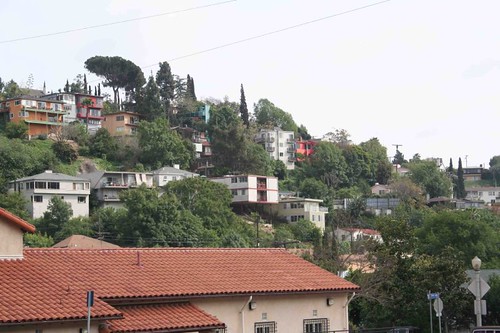
Perched on the Hill


Since the location was only mile or so away, I decided to walk to it.  I felt as ready for whatever this was going to be as could anyone who hadn’t ever attended a candidates meet-and-greet event.  I had studied the issues, knew the gentleman who was hosting it, and knew something of the other candidates who would be there.  I could foresee only one problem – I don’t do “cold calls.”

If you don’t know what a “cold call” is, let me explain to you the way I view one.  You walk up to someone you’ve never met, or even seen before, introduce yourself, tell them what you are doing (or selling), talk to them with the intention of winning their support (or getting them to buy whatever it is you are selling), and, finally, make the sale.  You are selling yourself, always, as a salesperson or a candidate.  Only one problem with that, I don’t really like sales.  More than that, I have this unreasoning fear of “cold calling.”  I don’t know where it comes from, but I’ve had it for a very long time.

My first memory of being terrified of talking to someone is in the neighborhood where I lived in Chicago when I was very young.  There had been an incident in the front yard of the apartment building where we lived.  I had my bicycle turned upside down and was turning the pedals with my hand to see how fast I could get the back wheel spinning.  The little girl from next door was watching me do this and, for some reason, got curious and reached out a finger to touch the moving bicycle chain.  Apparently, she lost the tip of that finger.  I didn’t see it.  All I remember is the crying and the commotion.  I guess I am to some extent responsible for that little girl getting hurt, perhaps entirely responsible.  Just by being where I was, doing what I was doing, and not warning her to keep her finger out of a moving machine made it my fault that she got injured.  Or so it seems.  It was never really explained to me.  All I know is that I was warned not talk to the people next door because they were suing my parents for the girl’s medical bills.  I didn’t really know what any of that meant; except that there was now a place that I had to avoid so that I didn’t inadvertently cause any more damage.  As I recall, the next door neighbor’s kids were the only friends I had on the block.  Now I had none.  I was afraid to ride past their house on my bike.  Ahhh, those happy childhood memories.

After that, I really had no interest in meeting new people or making new friends.  A few years, and three changes in location later (we moved first to Morton Grove and then to Peoria and then to East Peoria), my parents decided that I needed to go to summer camp.  I don’t recall them asking me if I wanted to go.  I certainly don’t recall dreaming fondly of heading off to somewhere out of state to spend a couple of weeks with strangers.  I’m sure it would never have occurred to me.  I was given no choice in the matter.  Part of the summer camp deal was that I could earn some of the money it cost to go there by selling cookies door-to-door.  Did I mention that my father was a salesman?

My father was/is a salesman.  From the day I was born until the day he retired, my father sold things.  Up until about 1975, he sold industrial fluorescent lighting fixtures – lots of them.  He worked for a company based in St. Louis as a route salesman.  That meant that he would travel all over southern Illinois calling on customers, finding new customers and making deals on lighting fixtures.  He was very good at it, apparently.  He loved cold calls.  He loved meeting strangers.  Strangers were potential customers to him.  He stopped selling lighting fixtures in about 1975, after moving to Denver, Colorado to sell them for a company located there.  The market for that sort of product had changed.  He moved up to the mountains of Colorado and started selling cars.  That was only a passing fancy, though, to pay his bills.  Where he was headed next was real estate.  He got a real estate license and then a real estate broker’s license and from then on until he retired, he sold real estate.  I had moved away from home by then so I wasn’t a witness to very much of the real estate sales period of his life, though I did visit him at a number of the places where he sold everything from raw land to time-shares.  Salesmanship ought to be in my blood.  It is not.

Resuming our tale of my door-to-door cookie sales experience, my parents informed me that I would need to sell these cookies to earn my way to camp.  Earning, I believe, means receiving something you desire in exchange for effort.  I had no desire to go to camp and so I had no reason to expend any effort selling cookies.  And I certainly had no interest in knocking on some stranger’s door, introducing myself, etc., etc.  I was terrified.  There was a standard spiel that I was supposed to memorize and recite as I met each new potential customer.  It went something like this: “Hi, my name is Brett Fernau and I am earning my way to camp by selling these delicious Chocolate Drop Cookies.”  There was probably more to the sales pitch, but that is all I remember.  I’d usually get that much of it spoken before I got the usual “No thanks” followed by the occupant of the house closing the door.  My parents took me out selling cookies whenever we had a mutually free moment.  I knocked on a lot of doors, I received a lot of rejections and I didn’t sell too many cookies.  You’d think that I’d have gotten over my fear of cold calls by just getting out there and making some.  I did not.  Each new closed door, behind which lived someone who I had never met, held just as much terror for me as the last one I had reluctantly approached.  It never got better.  My parents made me go to camp, too.  Selling cookies was neither fun, nor successful.  Camp was horrible for the most part.

I was going to say that I’ve never been comfortable meeting new people, but that isn’t quite true.  What I’m uncomfortable with is selling something to a stranger.  An oddly specific fear, I suppose, with no psychobabble buzzword to label it.  It’s a fear akin to stage fright and, thus, is a fear of ridicule and rejection.  I don’t mind meeting new people at a party, though I don’t seek them out.  I can have long conversations with someone I just met about subjects of mutual interest and thoroughly enjoy myself.  I can walk the streets of downtown Los Angeles at night taking photographs and not feel that I am in very much danger.  But, put me in a position where I have to sell something, especially myself, and I just want to be somewhere else, anywhere else, but preferably a place where salesmanship is not required.  This is unreasonable, of course.  I know that.  I ought to be able to overcome it easily.  I haven’t yet.  And now I had a meet-and-greet to attend.

I had promised to see this candidacy through to the end.  The meet-and-greet was part of that effort, so I walked up to the house, knocked on the door and was met by the host.  I help him set up chairs and carried a tray or two of snacks for the neighbors we anticipated would be attending.  Some of the other candidates arrived.  Since I had already met them, I could talk to them.  And then the neighbors began to arrive.  The more experienced of the candidates set the standard.  They greeted people, shook hands, talked about the issues, asked the neighbors about their concerns; they had all the right moves and knew their lines well.  I sat down at a table and watched them all interact.  I could not generate any interest in selling myself to these people.  It was cookie selling all over again.  I didn’t really want to be on the Neighborhood Council and so I didn’t care if these people voted for me or not.  No, that wasn’t it.  I just couldn’t beat my fear of meeting new people.  Finally, I stood up and walked over to where one of the other candidates was speaking to a group of neighbors.  I listened to him tell them about his views of the issues and respond to their questions and concerns.  He was kind enough to include me in the conversation and I did manage to express some of my opinions.  It wasn’t much, but it was better than sitting alone at the table.  I survived the candidate meet-and-greet.  I don’t suppose I gained any supporters, but at least I was there.  I did what I said I would do, even if I didn’t do it very well.

The candidacy process was almost over.  There was one more forum to attend.

Wednesday, April 23, 2014

The First Forum

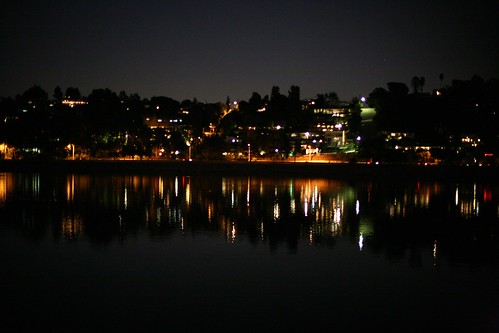
Reflecting on the Reservoir
Armed with my newly gained knowledge about the issues I thought were pertinent to the community, I was not completely terrified of the approaching candidate forum.  The time allotted for each candidate to speak was so small that I didn’t expect to get into too much trouble.

Where I arrived at the auditorium where the forum was taking place, I immediately saw that there were more candidates attending than people from the neighborhood.  I wasn’t surprised.  I’d seen the attendance at the Neighborhood Council meetings.  These were the same people I’d seen there.  We were given 30 seconds to introduce ourselves.  I told them who I was and how long I’d lived in the neighborhood and a brief summary of what I do.  I then told them that the entire concept of the Neighborhood Council ought to be re-envisioned to create a resource for communication and volunteerism, rather than the added layer of city government which it currently was.

There were to be two questions asked of all the candidates.  Each of us was given forty seconds to answer each question.  As the first question, we were asked what we thought was the single most important issue facing the community.  Fortunately, I was not the first to be called on to answer the question, so I was able to get an idea by what the other candidates said as to what I wanted to tell the people in the room.  I decided to spend my forty seconds talking about communication.  It wasn’t bad for an adlibbed speech.  I told them I thought our biggest problem was that we didn’t really talk to our neighbors very much anymore and that the way to build a community was through communication.  Forty seconds is a very small amount of time to say anything very meaningful, but I did the best I could.  Some of the other candidates were very good at articulating their favorite issue; others just rambled and quickly ran out of time before they said anything meaningful.  I was beginning to be grateful for the forty second limit on speechifying.

The second thing the moderator wanted us to address was what we thought the best way to reach out to the community might be.  Again, I was not the first to be called, so I had some time to decide what to talk about.  I chose the Neighborhood Watch program as an effective way to get people talking and working together for a common goal.  With the right group of people, a Neighborhood Watch can really be a great community builder, so I talked about that.  I thought I did well.  I again emphasized that people needed to look to each other for solutions to problems and not wait around for some government agency to figure it out.  I don’t suppose it was what anyone wanted to hear, but I do believe it to be true.  Government is really only good at stopping things or trying to stop things.  Actions are performed by individuals.  Ideas come from individuals.  Of course, it can be good to have lots of help putting those ideas into practice, but somebody has to be in charge.  Decisions are best made by individuals.  Groups generally arrive at lowest common denominator type solutions which are rarely, if ever, as effective as those solutions decided by well-informed individuals.

I survived the first forum with my dignity mostly intact.  The handful of people attending now had some idea where I stood on some basic issues.  Whether that made them more inclined to vote for me, I knew not.  Probably not, I guessed, since there seem to be a lot of people in California who thing government at all levels has the answers to all of their problems.  The next event was a candidate meet-and-greet that was taking place at a private residence in two days.  I had no idea what to expect, having never been to a meet-and-greet.  I suspected that I would not enjoy it, but that’s another story.

Wednesday, April 16, 2014

Political Reality Appears in all its Horror

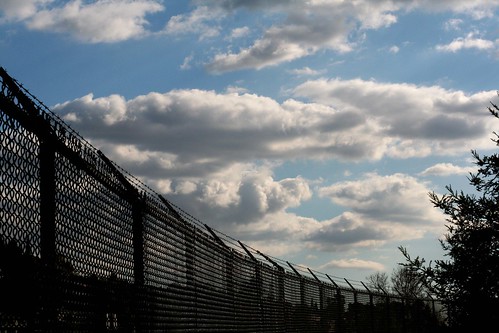
The Fence Around the Cloud Preserve

The more I became involved in the Neighborhood Council, the more I was horrified by how far astray it was from what I believe to be the proper scope and function of government.  At one point, I was so appalled that I decided I couldn’t go forward.  It was not the right thing for me to do or be involved in.  I sent the following letter to the leader of our little coalition.

Dear ____________,

     I had an interesting realization today.  The process began when I received a Facebook notification that the agenda for a special meeting of the Governing Board of the Silver Lake Neighborhood Council had been posted to the SLNC website.  Interesting, I thought, the last I checked the next meeting was in April.  I opened up the SLNC page and navigated over to the special meeting agenda.  After reading it through, I realized that there were almost no items there that I agreed with or would support.  In fact, there are several items that I oppose, other items that are empty gestures and none that I could support.  I thought back to the first SLNC meeting which I attended, the March Governing Board meeting, and realized that this is what the SLNC does.  These are the issues in which its members and the community are interested. 
     At our candidate meeting the other night, when I said I believe that I was the most conservative member of the group, I believe I understated my position.  I realize now that I was the only conservative member of the group that evening.  In fact, one of the few ideas I have in common with the group is the concept of civil debate.  That may well be the only thing we have in common politically.  The SLNC is nothing if it is not a political organization.  It is by design a tool of the City of Los Angeles to engage citizen support and input into local government.  Like most, if not all, government bodies in this city the SLNC operates on the left of the political spectrum; that much is obvious just from reading the latest Governing Board Agenda.  As I tried to say in that first meeting, I am on the right side of the political spectrum. 
     The SLNC reflects the political views and philosophy of the community.  I am at odds with those views and that philosophy.  There is no point in my spending time campaigning for election to a government body where the majority of members will always directly and often vehemently oppose my beliefs.  I’m not interested in being the lone dissenting voice, or the guy who opposes everything the council proposes.  That wouldn’t be fun, or useful for anyone.  My time would be better spent supporting a group that is working toward those goals and purposes which I consider vital and important.  The SLNC is not that group. 
     I should have done my homework before I ever submitted my name as a candidate.  I regret not doing that.  Until this evening, I truly had no idea what I was getting myself into.  Don’t get me wrong, though, I don’t dislike anyone on the “team.”  As a matter of fact, I believe that the team is made up of good, caring people who really do want what they think is best for the community.  We just don’t agree upon what is “best.”  That doesn’t make any of us bad people, just people who disagree. 
     I believe that my best course of action at this point is to withdraw my candidacy for the SLNC.  I hope this is not a great inconvenience to the team.  As I said, I should have done more research before I sent my name in to the city clerk.  I do want to continue to work with Nadine as a volunteer on the Public Safety Committee.  I think I can do some good there.  I’ll also, of course, continue to be active in my Neighborhood Watch.

Respectfully submitted,


I immediately received a return e-mail telling me that it would be unfair to the rest of the coalition for me to withdraw at that point since flyers had already been printed and the website created, all of which included my name.  I saw her point and the error of my ways.  I agreed to see the campaign through to the end.  The worst that could happen was that I might be elected, as unlikely as that seemed.  I made plans to speak at the candidate forums.

Monday, April 14, 2014

The Issues in Detail

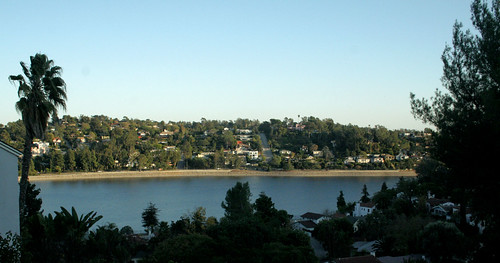
Silver Lake Reservoir

In order to get ready for the upcoming candidate forums, I needed to determine what solutions I had for all the issues that were likely to be discussed. First I listed all the topics I could think of that could be addressed by the Neighborhood Council. I’ll address them in no particular order here.

Crime Prevention: The best tool we have right now is Neighborhood Watch. With an active neighborhood watch group, communications are enhanced, awareness is increased and information is shared. When each person knows his neighbors and something of their habits, things that don’t fit are more easily observed. You need to know what is normal before you can see what is abnormal. If your neighbor’s teen-aged son and his friends hang around on the sidewalk in front of his house, that might be considered normal. If a few young people who you’ve never seen before are hanging around in front of his house, that would be noteworthy. You might call your neighbor and ask him what was going on. The group on the sidewalk might prove innocuous, or it might be of concern, depending upon what you find out from your neighbor. That’s the value of Neighborhood Watch, it gets people looking out and interested in what’s going on outside their houses. Information about what attracts crime to the neighborhood can also be shared among the neighbors. Then, if you see that one of them forgot and left their expensive electronic device in plain sight on the seat of their car, you can remind them that it would be safer if they put things away and out of sight. Communication, awareness and shared information, along with a close working relationship with local law enforcement, works very well in keeping a neighborhood safe.

Neighborhood Watches from different areas can ally and work together to expand their influence and make safer and ever increasing area and the network grows. More importantly, the Neighborhood Watch is a way for people to take responsibility for themselves, their neighbors, their neighborhood and their city without becoming overly dependent upon government to keep them safe. Law enforcement is just that, enforcement. Crime prevention is another matter and is best handled by individuals working together to create an environment where criminal activity is not tolerated, which is what Neighborhood Watch does best.

Disaster Preparedness: Like the Neighborhood Watch, a good disaster preparedness program can also enhance communications, awareness and be a way to share information and concerns. If only you, of all your neighbors, are the one prepared to survive in case of a major disaster, your survival will be less assured than if your neighbors were also adequately prepared. If you all have food, water, tools, first aid supplies and other necessities in quantities sufficient to survive until things get back under control, then you can concentrate on doing just that, surviving, not defending your supplies from those hungry people who didn’t plan ahead. Neighbors working together so as to be prepared for whatever might happen gives the neighborhood a broader purpose then just living day-to-day. People thinking about how they can help one another in a disaster scenario will tend to be very good neighbors indeed.

Open Space: Rather than looking to government to acquire, with taxpayer money, any given open space or green space area, and then spend more money to create a safe, attractive and usable space for the community, those people who live in the area ought to band together and buy the land they wish to preserve and then hold it in trust for the community. Those who use the space should be the ones to pay for development and maintenance of that space.

Community Gardens: If you want to get together with your neighbors and plant a garden, then one or more of you should allow the group to use your land for the garden. As with the open space/green space concept, if it is something you want then you and those of like mind ought to be the ones who pay for it. Finance it as a co-op with shared benefits and shared expenses.

The Silver Lake and Ivanhoe Reservoirs: As long as these bodies of water are owned by the city, plans to open up the shorelines to the public will be just dreams that will never come true. The city will never open itself up to the liability of a recreational facility of that magnitude. The fence will never be completely gone.

Parking: The battle for parking spaces between businesses and residents cannot be resolved without some sacrifice on both sides. The public transportation system in Los Angeles, which includes streets, freeways, trains, subways and buses, is inadequate to the needs of the city. Until public transportation can, in a timely manner, get you to where you need to go, people will find other ways to get around. Los Angeles is not a dense European city; instead it is a giant, sprawling, unorganized group of suburbs and neighborhoods that don’t lend themselves well to public transportation.

Commercial Development: Commerce is good, that’s where jobs come from, among other things. However, new businesses must be carefully evaluated as to their impact upon the community in the areas of added traffic, both foot and auto. There needs to be a balance between residential and commercial space so that everyone gets what they need. If the new business is a bar or restaurant, noise late into the evening can be a problem for the people living nearby. Patrons need a place to park and if the business has inadequate space for that purpose, the neighborhood becomes their parking lot to the detriment of the residents therein.

Small Lot Development: This is a concept where a number of dwellings are built close together on a single lot with a shared common area and a shared parking area. Depending upon the number of units that are built, this can work or not inside a residential neighborhood. If there is adequate parking and setback from adjacent living spaces, it could be workable for the surrounding residents. If not, then the added traffic and noise may be quite detrimental to the neighborhood.

AirBnB: AirBnB is a big business and there is a lot of money at stake, both for the company and for the participating homeowners, but if you are negatively impacting your neighbors through parking problems, excess noise at unusual hours and disrespect for the neighborhood, then you are being unethical in running your home as a BnB. If you are not zoned for short-term rental, then you should not be using your property in that way. You should have gotten permission or variance from the city before beginning a short-term rental program in a residential neighborhood. You knew the zoning regs when you bought the home and should abide by them now. If you wish to change the zoning regulations so that you can legally operate a BnB from your home, then you should continue to go through the legal process with the city and attempt to make that change. At present, though, it is a violation of the law and operations should be suspended until the legal process is completed.

Gangs and the Gang Injunction: If the word Gang is defined as a support group for criminal activity, then it has no legitimate function in the community. The violence and intimidation that are used in the course of gang business are unacceptable in a civil society. If the gang injunction gives law enforcement another tool to curb the violence and discourage the gang in its operations, I am all for it.

Budget Overages for the SLNC: If we are to be proper stewards of a portion of taxpayer monies, then we should strive to get as much benefit as possible for the least amount of money spent. Giving away money to "worthy causes" as a feel-good gesture is not a proper function of government. It we can use the taxpayer monies to make the neighborhood safer, more attactive, more pleasant to live in, then, perhaps, that is money well spent. Otherwise, that money is best left in the pockets of the taxpayers by way of lowered taxes and less money spent on government.

Pedestrian and Bicycle Safety: No driver wants to run over another human being. Did I even need to say that? It happens, though, and it needs to be addressed. Part of the problem is distracted drivers – drivers doing something else besides paying attention the road in front of them, the traffic, the bicycle wobbling along between the parked cars and lane of traffic, the upcoming crosswalk, the guy about to jaywalk, etc. There is too much going on while driving a car to be doing anything other than just driving and paying attention to everything around you. Driving while texting, talking on the phone, programming the GPS, tuning in the radio, applying makeup, eating, drinking, or anything else that isn’t driving, is the wrong thing to do. Another aspect of the problem that I have observed is they some bicyclists ride very aggressively and put themselves in unnecessary peril instead of riding defensively and avoiding potential encounters with large, heavy, moving metal objects.

Infrastructure – Street and Sidewalks: This almost naturally falls into the purview of the Neighborhood Watch. Damages streets and broken sidewalks are a public safety issue. While we’re out keeping an eye on the neighborhood, we could also take pictures of infrastructure damage and forward them on to our local City Council Office as coming from the Neighborhood Watch Group. This would give the complaint a bit more weight and might precipitate more prompt action by the city. If there are unhappy voters involved, the politicians tend to pay attention.

Water Use: I’m all for frugal use of water. We live in a desert, after all. Most people don’t overwater, or waste water because it costs them money when they do. That sort of regulation makes sense to me, and it falls under what government does best, which is stop things it doesn’t like. Making things more expensive tends to lessen demand for them. Making them too expensive gets you back into politics and politicians who can require the Department of Water and Power to keep fees at reasonable levels so as to keep the voters content.

Homelessness: This isn’t really an issue that a Neighborhood Council can do very much about, except offer sympathy to the poor souls who live on the street. Some large percentage of the homeless population is being created by the “mental health” industry which destroys people by using psychotropic medications, and barbaric “therapies,” and then turns them out onto the street when their insurance runs out. It’s a bigger problem than a Neighborhood Council is designed to handle.

Noise and Activity from the Local Bars: This is an area where the Neighborhood Council could help, but the hard work must be done by those most affected, the neighbors themselves. One nearby group of neighbors banded together and, with some help from certain members of the Neighborhood Council with City Hall connections, is having permit parking implemented in their area. This will force the bars to provide some other place for the patrons to park and it will move those patrons out of the neighborhood where they were very much a nuisance. This is good example of what a Neighborhood Council ought to be doing. It should be helping people in the community to define and work out how to solve their own problems.

Once I had defined the issues for myself, I was able to go into the candidate forums knowing what I wanted to say about each one. As it turned out, very few of the issues were address in the forums. The time given to each candidate to speak on any given subject was never any longer than 60 seconds. You can’t say very much in that length of time. It didn’t matter much what anyone said because there were more candidates at the forums than public. We were essentially taking to each other, which accomplished nothing.

In thinking about all these issues in light of my philosophy on government, I realized that what people really need to do is figure out how to solve their own problems, rather than waiting for some government agency to solve it for them.  A government’s main power is the ability to stop things.  People don’t really need stopping as much as they need to simply look around, talk to their neighbors, get a good idea of what the real problem is and then work out a solution.  That’s basically what I said at both of the candidate forums.  No one got it.  They weren’t there to encourage self-reliance or independent initiative, the candidates were they because they want to be part of the government and the audience was there to see what the candidates were going to promise to do for them.  It was politics at its worst.  I did not enjoy it.

Friday, March 28, 2014

Silver Lake Neighborhood Issues

So It Begins


One of the things I’m going to have to do as a candidate for the Silver Lake Neighborhood Council (SLNC) is to speak at several candidate forums.  To do that effectively I need to know what concerns and issues that I am likely to be asked to give an opinion upon.   Listening to public comments at the meetings I’ve attended gave me some idea as to what those might be.  Living in the neighborhood made me aware of others.  I made a list of them and then started gathering information on those I didn’t know very much about.  The issues as I perceived them are as follows:
Crime Prevention
Disaster Preparedness
Open Space
Community Gardens
Reservoir Plans and Usage
Parking
Commercial Development
Small Lot Development
Air B’n’Bs
Gang Activity
The SLNC Budget
Pedestrian and Bicycle Safety
Infrastructure – streets and sidewalks
Water use
Homelessness
Noise and activity from the local bars 

There are certainly other issues and concerns, but my list seems to cover those which the Neighborhood Council could do something about.  Because of the large number of candidates, fifty nine at last count, the time each person will be able to speak on any given issue at the upcoming forums will be severely limited, so I need to get my thoughts on each of the issues distilled down to the essentials so that I can address them clearly and concisely.  To do that I looked at each one, decided what I considered were the important factors and then made notes addressing those factors. More on the details of my thoughts in the next post or two.

There was a special meeting of the Governing Board posted on the SLNC website.  There were items on the agenda that I think fall outside the scope of what the Neighborhood Council should be addressing.  There was a motion in support of the veto of a Senate Bill in Arizona, and a motion in support of some sort of climate change march and rally.  It is this sort of activity that incited me to want to get involved with the Neighborhood Council. 

If the SLNC is going to make motions in support of things, those things should have something to do with the neighborhood.  I instantly thought of several people in the area who should have motions made supporting the work they are doing, work that betters the community in a tangible way, like cleaning up litter, working with local business and the city to mitigate parking issues, heading up a neighborhood watch, making a neighborhood safer for children, working with LAPD and the city on public safety issues, and bringing C.E.R.T. training to the area.  We need to acknowledge and support the people who are doing things to help their neighborhood and make it a better place in which to live, and leave the out-of-state and global issues for someone else to deal with.  If you’re going to make a feel good gesture, make one that benefits someone who is working for the community and sets them apart as an example of what we all should be doing.  If I am elected, I hope I will be able help the council do more than just make empty gestures.

Wednesday, March 19, 2014

The Neighborhood Council

Reflecting on the Reservoir


Through the Neighborhood Watch, I learned about Community Emergency Response Team (C.E.R.T.) training.  The Los Angeles Fire Department offers a series of seven evening classes that attempt to teach people what to do in the event of a natural disaster such as an earthquake, or a manmade disaster such as an act of terrorism or civil unrest.  Over the seven weeks (there is one class a week), you learn a bit of first aid, a few search and rescue techniques, some organizing skills, and you get some advice on what you might need in the way of tools and supplies for your own personal safety and survival.  I found the information quite useful, if somewhat limited in scope.  The limited scope encouraged me to do some supplemental studies where I got some in-depth information on the same subjects the C.E.R.T. classes covered.  I am continuing with that study since there doesn’t seem to be any limit to the scope of being prepared.  Even the years of my Boy Scout training and my attaining the rank of Eagle Scout were only the beginning of learning what it means to Be Prepared, but that subject will be several blog entries of its own.  You may have noticed that the title of this entry is “The Neighborhood Council.”  That’s what I want to tell you about today. 

I have known of the Neighborhood Council for a number of years, but, until recently, I hadn’t paid much attention to what it did or who was involved.  At one of the CERT classes, some flyers were handed out which gave information about and sought candidates for the upcoming Neighborhood Council elections.  I took one of the flyers with me when we went home after the class.  It sat on my desk for a day or so and then I looked at it more carefully.  There was a website address given and, out of curiosity, I had a look at it.  There were some candidates already listed, so I looked at those.  I noticed that they were running in regions.  I figured out which region I was living in and looked to see what candidates were running there.  There was only one and I didn’t at all agree with what he saw as the immediately and long-term needs of the community.  There were two open seats for my region.  I just couldn’t let it go.  If this person was the only one running, a dissenting voice would be needed just to keep things in perspective.  I submitted myself as a candidate.  That one innocent act of seeing a need and deciding to fill it was the tiny pebble that started an avalanche in my life. 

The day I submitted my name was just five days before the deadline.  I thought that at that late date it was unlikely that very many other people would be entering the race, and it is a “race,” as I have come to find out.  By the time the deadline arrived there were sixty-two candidates running.  Between the time I entered my name as a candidate for my region and the arrival of deadline, I decided that I might have a better chance of getting elected if I ran “at-large,” in other words for the whole area of Silver Lake, rather than only for my region.  I withdrew as a regional candidate and put my name in as an “at-large” candidate. 

Now I needed to know more about what I had gotten myself into.  I attended the next meeting of the Silver Lake Neighborhood Council (SLNC) Governing Board.  It was better and worse than I expected.  I know what politics is like in Los Angeles and this was just a local version of the same old story.  There are people who expect government to do things for them and there are people who want to be left alone to do things for themselves.  In Los Angeles, there seems to be a great many more of the former than the latter involved in any given political discussion.  The lack of civility in the comments and questions from the community to the council members was not completely unexpected, but I was unpleasantly surprised by the amount of name-calling and childish tantrum throwing that occurred when some people didn’t get the results they were demanding.  There was also a fair amount of squabbling over technicalities and procedural issues which took time away from their actually getting through the items on their agenda.  In other words, not a lot got done.  The most contentious issue that came up, was discussed and decided upon, but was later ruled invalid by the bureaucracy at the city level that oversees these Neighborhood Councils.
 
I subsequently attended a couple of committee meetings, one dealing with Public Safety and another with Planning and Urban Design.  The public who attended those meetings had a very similar attitude to those I had seen and heard at the Governing Board meeting.  I was getting a very good idea what I was getting into. 

After discussing my candidacy with a few other like-minded people, I decided to go forward.  If I am elected, which seems rather unlikely, I hope to be able to add a sane and rational voice to the council.  I have acquired a working knowledge of the fundamentals of good government by studying U.S. and world history.  Perhaps, I will be able to share some of those fundamentals with the group.  If nothing else, I have a foundation of knowledge to stand upon and no real axe to grind in being on the council.  My purpose in running is simply to contribute some civility, rationality, frugality and common sense to this Neighborhood Council.  From what I’ve seen so far, those things would be valuable to that organization and of benefit to this community.

Tuesday, March 18, 2014

The Neighborhood Watch

High Over Head


Over the last couple of years or so, I’ve gotten quite involved with our Neighborhood Watch group.  The neighborhood in which I live has a very low crime rate.  Mostly what happens is that someone leaves something valuable in plain sight in their vehicle and the opportunistic criminal walking by sees it, breaks the window and steals it.  We see a very small amount of tagging here, but it doesn’t seem that there are any gangs fighting over the territory our neighborhood encompasses.  At the first of the year, there was one armed robbery that was attributed to gang activity.   Most of the time, this is a very quiet and safe neighborhood.  The same cannot be said for some other areas which are quite near us, but for some reason the immediate area in which we live is a little island of safety. 

Of course there are people who live in this neighborhood who see danger lurking everywhere.  When I hear a report of graffiti, gang activity, suspicious character loitering the dark places, my first inclination is to go and see what is going on.  In recent years, in every case, I have found nothing to be very alarmed about and no reason to be afraid that we are being taken over by the forces of evil.  That wasn’t the case when we first moved to this neighborhood some twenty-four years ago. 

When we first moved here from Hollywood, there was already an active Neighborhood Watch group headed up by the wife of the neighbor across the street.  At that time there was a rash of burglaries going on.  The house next door to us was broken into twice.  Eventually, the criminal was caught and the burglaries stopped.  It turned out that it was just one guy who was responsible for all the burglaries and with him off the street the problem was solved; a triumph for the Neighborhood Watch.  Carol and I were assaulted out in front of our house one night by a couple of kids who has walked up the hill from the boulevard below us.  They demanded my wallet.  The young gentleman who was confronting me claimed to have a gun.  I asked to see it.  He waffled.  I told him that he had better leave the neighborhood and never come back.  Meanwhile, Carol was telling the other gentleman that she was going to tell his mother what he was doing.  I don’t think our reaction was what they expected.  They left and we finished putting out our trash cans so that they could be picked up in the morning.  We also had a car stolen from in front of the house, a 1967 VW Beetle which Carol had been driving back and forth to work.  We went out one morning and it was gone.  The police took a report, but we never saw it again.  I never expected them to find it.  The 1967 Beetle is a “one-year” car, which means that many of the parts are unique to that year.  That makes the parts worth more than the car and that, or course, is why it was stolen.  If you want to learn more about my Volkswagen adventures, which are ongoing, you can find those stores on my “If All Else Fails” blog.  We replaced the stolen car and no one suffered very much over the crime.

The woman who was heading up that first Neighborhood Watch group eventually divorced her husband and moved away.  Without her that first group faded away. 

This second Neighborhood Watch group, I believe, will last a while.  Its membership spans a wider area and there are more active members.  I am one of those.  Having been involved with the new group since its initial formation, I have watched it grow and, perhaps, even helped it grow in some small way.  I was giving the whole concept of Neighborhood Watch some thought a couple of weeks ago and in light of some of the other subjects that I’ve been studying, I wrote a few paragraphs on what my ideal Neighborhood Watch would be.  That is what follows.  I hope you find it enlightening. 

What is a Neighborhood Watch?
Most of the descriptions of a Neighborhood Watch group tell the story of a group of neighbors who get together to keep an eye on what is going on in their immediate area.  When they see anything unusual and/or possibly criminal, members are advised to notify their local law enforcement organization with as much information as they can provide about the nature of the unusual or suspicious activity.  Often a description of a Neighborhood Watch also includes the fact that it enables the members to get to know each other better so that they can be aware of when someone is going to be absent (away on a vacation or business trip), when someone is having work done on their house, or any other unusual activity that might be scheduled so that they can keep a more watchful eye on each other’s property while that activity is occurring.  These are good things, but I don’t think this description goes far enough in describing my ideal of a Neighborhood Watch.
The value of a Neighborhood Watch
In the city, people tend to keep to themselves.  We don’t want to bother anyone else or be bothered ourselves.  Our lives revolve around working, commuting, TV and our social media.  We don’t get out as much as we did in our distant past.  Entertainment comes to us inside our houses and apartments, not from getting together with friends and neighbors as it did some time ago.

Participation in the Neighborhood Watch group gets us back in touch with our neighbors and our neighborhood.  It gets us looking out instead of looking in.  That, in and of itself, would be a good enough reason to have a Neighborhood Watch group, but there is more to it than that.
When disaster strikes, be it earthquake, wildfire, civil insurrection, or something else, who will help you survive?  The first responders readily admit that they will be overwhelmed and unavailable shortly after any disaster begins.  Who will you turn to for help when you need it most?  If you’ve gotten to know your neighbors, worked with them while building a safer community, talked with them about what to do in a disaster, then you will know who to turn to and so will they.  Together you can enhance your chances for survival, not guarantee it, of course, but significantly improve your odds of surviving a disaster.
As my C.E.R.T. (Community Emergency Response Team) instructor explained to me in the very first class, disasters come in all sizes.  Some, like a car accident or a house fire or the death of a loved one, are very, very personal.  Train wrecks, floods, earthquakes, wildfires, freeway pile-ups, and riots are disasters that have broader effect and involve whole neighborhoods, communities or cities.  If you know that you and your neighbors can call on each other for help, potential disasters become a little less frightening.  If you and your neighbors have talked through possible disaster scenarios; if each of you has put aside a few essential first-aid, food and shelter supplies “just in case;” then you may find that your neighborhood is a sanctuary in a disaster, a place where you can go to find help, a shelter from the storm.
At this point, instead of creating a Neighborhood Watch, you will have created a community.  You’ll have people around you whose combined skills and resources can see you through the disaster, whatever it might be.  But you have to create it.  Look around you.  Do you know what your neighbors have planned in case of a disaster?  Do you know what skills and resources you will need to live “off of the grid” for a week, two weeks, a month, six months?  What will you eat?  How will you cook?  Where will you dispose of your wastes?  Where do you find water?  What native plants can you safely eat?  You probably couldn't survive for very long on your own.  Survival is a big job and you won’t have time to do everything yourself.   But with the variety of resources and skills that you can find in a community of people, you might find that, together, you and your neighbors could do okay for a while.
What can you do?
You’ve already taken the first step.  You have attended a Neighborhood Watch meeting, or several.  You are interested in creating a safe neighborhood.  The next step is to talk to your neighbors.  If you don’t know them yet, wait until they’re outside and go introduce yourself.  Or be bold and knock on their door and introduce yourself.  Bake a cake and share it with someone nearby.  Talk to them.
Ask them what they plan to do if there is a major earthquake?  That question will either be a conversation starter or the end of the conversation depending on the answer you get.  If you live near someone who plans to let the police department, fire department, utility workers, rescue organizations – everyone else, in other words – take care of them, then when the disaster does happen that neighbor will be part of the problem, unless you can find a way to enlighten them.  Find the people around you who are interested in being prepared for whatever the environment might throw at them.  Those are the people to cultivate.  Get them to Neighborhood Watch meetings.  Have get-togethers with them, cook-outs, block parties.  Get to know each other and together you’ll begin to form a group that can work together if and when something bad happens.  Keep talking.  Keep planning.  Keep preparing.
Only the unknown is frightening.  The known you can plan for and do something about.  Take a look around you and think about what will happen if the power goes off, or the water stops flowing, or the grocery stores are empty.  Figure out what you and your neighbors can do to survive under those conditions.  Learning and knowing what you can do will help assure your survival.
Plan for the worst and work for the best.
Build a first-aid kit and learn how to use its contents.  Build a survival kit.  Include in it those things which you think you might need when you only have your own resources to call upon.  Stock up on food and water.  How much you set aside will depend upon how long you think you might have to live on it.  Study, learn, and practice those skills you might need if the power and water stop and if the first responders are overwhelmed and unavailable to you.  It is your responsibility to take care of yourself and your loved ones, including your pets, in a disaster and every day.  When you know that you can do that, and know that you’re surrounded by others who can help, you’ll be ready for whatever might happen.  And if that disaster never happens, well, you got to make some new friends, learn some new skills, and, perhaps, you gained a little more confidence in your ability to take care of yourself in any situation you might encounter.