Showing posts with label crime prevention. Show all posts

Sunday, June 29, 2014

Situational Awareness - An Article I Wrote

Uniformity


Situational Awareness
By Brett A. Fernau ©2014 All Rights Reserved


What is “situational awareness?”  Very simply, it is knowing what is going on around you.  You may well believe that you already have this.  Of course you know what’s going on around you.  Do you really?  And more importantly, do you always know?

When you go out for a walk, do you take your smart-phone with you and catch up on your texts, listen to messages, return calls?  How is your situational awareness while you do that?  Do you plug in your headphones and listen to music while you walk?  The music inspires you to walk a little faster and it relieves some of that stress that has built up in you during the course of the day.  It makes you happy.  But how does it affect your situational awareness?

When you walk out your front door in the morning to get in your car and go to work, do you pause at the threshold and look around before locking the door and proceeding down the sidewalk?  As you walk toward your car do you focus on just going from point A to point B, or do you look around you to see what’s going on?  Of course you look in your mirrors and check for other cars before you pull out into the street.  Do you change stations on the radio, set the GPS, make or take phone calls while you drive?  How does that affect your ability to react to what other drivers are doing around you?  Does situational awareness apply to driving a motor vehicle?

You make it safely to your office and park your car.  As you exit your vehicle are you aware of what is going on in the parking garage, or on the street where you parked?  Or are you running late and just need to concentrate on getting to where you need to be?  During your work day, how much attention do you have on your surroundings?  Would you notice if an angry customer showed up looking for trouble, or a disgruntled, recently terminated, fellow employee came in seeking revenge?  You’ve survived the workday and it is time to go home.  Are you aware of who is in the elevator with you, who is in the lobby of the building as you walk toward the exit?  Is someone following you as you walk down the street toward your car?  Who is in the area around where your car is parked?  If you parked in the building’s parking garage, was there someone hanging around the entrance who is now following you toward your car?  You get into your car and drive out onto the street toward home.  Has that car that pulled out behind you been following you for quite some time?  As you approach your house, is that same car still following you?

Situational awareness is knowing what is going on around you at all times and in all situations.  To know that, you must look.  If you are preoccupied with work, or a personal problem; if you are distracted by a phone call, or a text message; then you have put yourself in some degree of danger.  How much danger you may be in depends upon the situation.  At home, in your backyard the danger may be negligible.  In a parking garage, at the local shopping mall, at 11:00 p.m. the danger may be significantly greater.  In your car, driving in traffic at 60 m.p.h., the danger could be quite extreme.  Awareness of where you are, of who and what surrounds you, and of the time of day are all elements which define the situation in which you find yourself.

We are admonished, these days, not to be judgmental.  In terms of situational awareness, you must constantly use your very best judgment to evaluate your surroundings in order to stay safe.  Judgment requires you to ask:

What are the intentions of that person following me, or that group of people loitering on the sidewalk in front of me?

Is there enough time for me to cross that street without being struck by an oncoming vehicle?

Do I open my front door to that stranger who just rang the bell?

I just heard a loud noise outside, do I go investigate it?

Is this a safe place to park my car while I’m away for a couple of hours?

I’m just going into that store for a minute.  Do I leave my GPS in its dashboard mount or put it away out of sight?

Is this offer I just received too good to be true?

Someone just bumped the rear of my car on this dark street.  Should I get out and deal with it?  Should I call the police?

You need to use judgment to make a decision.  Is the situation you are in dangerous?  How do you know?  What is there about the situation which could cause you harm?  You assess all of the elements that you see, you add that to what you know, you consider what skills you have that might mitigate the danger in some way and then you use your judgment to make a decision about how to handle it.  Do you attack, retreat, hide, avoid, or ignore it?  How do you decide?  You weigh all the factors and you make a judgment as to the danger level.  You make a judgment on the safest way to proceed and then you do something, all based upon your own best judgment.  If you don’t make a decision, the environment will make it for you.  If you take the non-judgmental route, the outcome will rarely be in your best interests.

A high degree of situational awareness gives you knowledge about your surroundings so that you can make sound judgments about how to proceed.  A low degree of situational awareness can get you into serious trouble.  Most people take for granted the idea that they know what is going on around them, but if you were to stop, at random, someone on the street and ask them questions about their surroundings, you would find that their situation awareness was quite minimal.

It is an inherent human ability.  A baby has some awareness of what is going on around him, he may not know exactly what activity is going on nearby, but he knows that something is happening.  He recognizes his mother’s voice, perhaps, and turns his head in that direction.  That baby has some situational awareness, it almost seems instinctual, but in reality it is a learned, survival behavior reinforced by positive and negative feedback.  His mother’s voice means food, warmth and love and so, of course, he reacts positively to her voice.  If he hears a loud noise, he is startled.  He wonders what it is, he is confused and defenseless and cries out.  He is aware of his surroundings.  As you grow older, you gain experience; you know what many sounds mean, you learn what things are dangerous to you, what odors indicate toxic substances; you use your senses and your knowledge to attempt to navigate safely through your environment.  When you are seeking information about your surroundings, your level of situational awareness goes up.  When you are tired, bored, complacent, or distracted, your level of situational awareness goes down.

As with any skill you have, be it running, jumping, singing, playing piano, or anything you do consciously, situational awareness can be drilled and practiced so you get better and better at it.  It is something that you do, not an instinct and not a stimulus-response mechanism.  With just a little regular practice you can get quite good at it.  Here’s how you would go about raising your level of situational awareness.  Locate a safe area in daylight hours and go for a walk.  If you have a partner or a friend with you, all the better, but you can do this by yourself as well.  Have your partner give you this command: “Look around you and find something.”  Perform the action and tell your partner what you found.  Your partner would acknowledge your answer with: “Good,” and give you the same command newly.  Continue in this way until your partner feels more aware of his surroundings and then switch roles where you give the command and your partner does the looking and answering.  Do this exercise as you walk around your neighborhood, or through the park, anywhere you might be.  You can even do it by yourself as you walk around, or even as you sit in your chair at home.  Train yourself to look around and really see what is there, not what you expect to find, but what is actually there.  You may be surprised by how much of what is around you that you were not really noticing.  Do the drill everywhere you go.  Your situational awareness will get better and better.  Expand the drill by not just looking, but, instead, use your other senses, hearing, smell, taste, touch.  What do you hear around you?  What else do you hear?  What made the sound?  What do you smell in your environment?  Can you taste anything on the wind?  How does the wind feel on your skin?  You can be more aware of your environment than you ever imagined and that awareness can save your life.

Get outside, move around, extend your senses, know what is going on around you, in your yard, on your block, in your neighborhood, in your city, in your country and in your world.  Get as much information as you can about your environment, seek truth, look beneath the surface, behind the scenes, under the rocks, evaluate the data you receive, verify the sources, question motives, and keep your own counsel.  Situational awareness extends beyond your immediate surroundings.  Find out what is going on, ask questions, communicate, look for yourself, read, write, listen, observe and when it becomes necessary to act to insure your own survival and that of your loved ones, you will have all the information you need to make decisions about just what you need to do.

Situational awareness is only the first of the fundamental skills you need to survive in the world as it is today.  But your situational awareness may well help you avoid needing any but the most rudimentary self-defense skills.  Your best defense against any hazardous situation is to avoid it.  You aren’t expendable.  If are aware of what you are getting yourself into, you can choose not to get yourself into it.  If you can’t avoid it, then you will need offensive and defensive skills and the willingness to use them.  As you become more aware of the world around you, you will soon see for yourself what kinds of skills you need to survive the worst that can happen to you and your loved ones.  Figure out which of those skills best suit your abilities and begin learning them.  Get yourself in good physical condition, get enough sleep, eat a healthy diet and you might just have a chance in whatever happens next on this troubled planet of ours.

Monday, April 14, 2014

The Issues in Detail

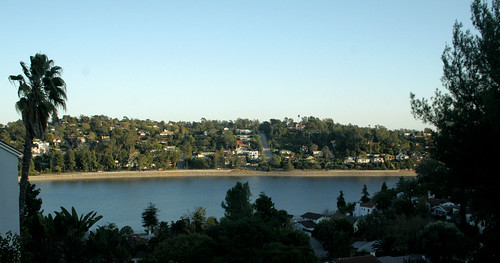
Silver Lake Reservoir

In order to get ready for the upcoming candidate forums, I needed to determine what solutions I had for all the issues that were likely to be discussed. First I listed all the topics I could think of that could be addressed by the Neighborhood Council. I’ll address them in no particular order here.

Crime Prevention: The best tool we have right now is Neighborhood Watch. With an active neighborhood watch group, communications are enhanced, awareness is increased and information is shared. When each person knows his neighbors and something of their habits, things that don’t fit are more easily observed. You need to know what is normal before you can see what is abnormal. If your neighbor’s teen-aged son and his friends hang around on the sidewalk in front of his house, that might be considered normal. If a few young people who you’ve never seen before are hanging around in front of his house, that would be noteworthy. You might call your neighbor and ask him what was going on. The group on the sidewalk might prove innocuous, or it might be of concern, depending upon what you find out from your neighbor. That’s the value of Neighborhood Watch, it gets people looking out and interested in what’s going on outside their houses. Information about what attracts crime to the neighborhood can also be shared among the neighbors. Then, if you see that one of them forgot and left their expensive electronic device in plain sight on the seat of their car, you can remind them that it would be safer if they put things away and out of sight. Communication, awareness and shared information, along with a close working relationship with local law enforcement, works very well in keeping a neighborhood safe.

Neighborhood Watches from different areas can ally and work together to expand their influence and make safer and ever increasing area and the network grows. More importantly, the Neighborhood Watch is a way for people to take responsibility for themselves, their neighbors, their neighborhood and their city without becoming overly dependent upon government to keep them safe. Law enforcement is just that, enforcement. Crime prevention is another matter and is best handled by individuals working together to create an environment where criminal activity is not tolerated, which is what Neighborhood Watch does best.

Disaster Preparedness: Like the Neighborhood Watch, a good disaster preparedness program can also enhance communications, awareness and be a way to share information and concerns. If only you, of all your neighbors, are the one prepared to survive in case of a major disaster, your survival will be less assured than if your neighbors were also adequately prepared. If you all have food, water, tools, first aid supplies and other necessities in quantities sufficient to survive until things get back under control, then you can concentrate on doing just that, surviving, not defending your supplies from those hungry people who didn’t plan ahead. Neighbors working together so as to be prepared for whatever might happen gives the neighborhood a broader purpose then just living day-to-day. People thinking about how they can help one another in a disaster scenario will tend to be very good neighbors indeed.

Open Space: Rather than looking to government to acquire, with taxpayer money, any given open space or green space area, and then spend more money to create a safe, attractive and usable space for the community, those people who live in the area ought to band together and buy the land they wish to preserve and then hold it in trust for the community. Those who use the space should be the ones to pay for development and maintenance of that space.

Community Gardens: If you want to get together with your neighbors and plant a garden, then one or more of you should allow the group to use your land for the garden. As with the open space/green space concept, if it is something you want then you and those of like mind ought to be the ones who pay for it. Finance it as a co-op with shared benefits and shared expenses.

The Silver Lake and Ivanhoe Reservoirs: As long as these bodies of water are owned by the city, plans to open up the shorelines to the public will be just dreams that will never come true. The city will never open itself up to the liability of a recreational facility of that magnitude. The fence will never be completely gone.

Parking: The battle for parking spaces between businesses and residents cannot be resolved without some sacrifice on both sides. The public transportation system in Los Angeles, which includes streets, freeways, trains, subways and buses, is inadequate to the needs of the city. Until public transportation can, in a timely manner, get you to where you need to go, people will find other ways to get around. Los Angeles is not a dense European city; instead it is a giant, sprawling, unorganized group of suburbs and neighborhoods that don’t lend themselves well to public transportation.

Commercial Development: Commerce is good, that’s where jobs come from, among other things. However, new businesses must be carefully evaluated as to their impact upon the community in the areas of added traffic, both foot and auto. There needs to be a balance between residential and commercial space so that everyone gets what they need. If the new business is a bar or restaurant, noise late into the evening can be a problem for the people living nearby. Patrons need a place to park and if the business has inadequate space for that purpose, the neighborhood becomes their parking lot to the detriment of the residents therein.

Small Lot Development: This is a concept where a number of dwellings are built close together on a single lot with a shared common area and a shared parking area. Depending upon the number of units that are built, this can work or not inside a residential neighborhood. If there is adequate parking and setback from adjacent living spaces, it could be workable for the surrounding residents. If not, then the added traffic and noise may be quite detrimental to the neighborhood.

AirBnB: AirBnB is a big business and there is a lot of money at stake, both for the company and for the participating homeowners, but if you are negatively impacting your neighbors through parking problems, excess noise at unusual hours and disrespect for the neighborhood, then you are being unethical in running your home as a BnB. If you are not zoned for short-term rental, then you should not be using your property in that way. You should have gotten permission or variance from the city before beginning a short-term rental program in a residential neighborhood. You knew the zoning regs when you bought the home and should abide by them now. If you wish to change the zoning regulations so that you can legally operate a BnB from your home, then you should continue to go through the legal process with the city and attempt to make that change. At present, though, it is a violation of the law and operations should be suspended until the legal process is completed.

Gangs and the Gang Injunction: If the word Gang is defined as a support group for criminal activity, then it has no legitimate function in the community. The violence and intimidation that are used in the course of gang business are unacceptable in a civil society. If the gang injunction gives law enforcement another tool to curb the violence and discourage the gang in its operations, I am all for it.

Budget Overages for the SLNC: If we are to be proper stewards of a portion of taxpayer monies, then we should strive to get as much benefit as possible for the least amount of money spent. Giving away money to "worthy causes" as a feel-good gesture is not a proper function of government. It we can use the taxpayer monies to make the neighborhood safer, more attactive, more pleasant to live in, then, perhaps, that is money well spent. Otherwise, that money is best left in the pockets of the taxpayers by way of lowered taxes and less money spent on government.

Pedestrian and Bicycle Safety: No driver wants to run over another human being. Did I even need to say that? It happens, though, and it needs to be addressed. Part of the problem is distracted drivers – drivers doing something else besides paying attention the road in front of them, the traffic, the bicycle wobbling along between the parked cars and lane of traffic, the upcoming crosswalk, the guy about to jaywalk, etc. There is too much going on while driving a car to be doing anything other than just driving and paying attention to everything around you. Driving while texting, talking on the phone, programming the GPS, tuning in the radio, applying makeup, eating, drinking, or anything else that isn’t driving, is the wrong thing to do. Another aspect of the problem that I have observed is they some bicyclists ride very aggressively and put themselves in unnecessary peril instead of riding defensively and avoiding potential encounters with large, heavy, moving metal objects.

Infrastructure – Street and Sidewalks: This almost naturally falls into the purview of the Neighborhood Watch. Damages streets and broken sidewalks are a public safety issue. While we’re out keeping an eye on the neighborhood, we could also take pictures of infrastructure damage and forward them on to our local City Council Office as coming from the Neighborhood Watch Group. This would give the complaint a bit more weight and might precipitate more prompt action by the city. If there are unhappy voters involved, the politicians tend to pay attention.

Water Use: I’m all for frugal use of water. We live in a desert, after all. Most people don’t overwater, or waste water because it costs them money when they do. That sort of regulation makes sense to me, and it falls under what government does best, which is stop things it doesn’t like. Making things more expensive tends to lessen demand for them. Making them too expensive gets you back into politics and politicians who can require the Department of Water and Power to keep fees at reasonable levels so as to keep the voters content.

Homelessness: This isn’t really an issue that a Neighborhood Council can do very much about, except offer sympathy to the poor souls who live on the street. Some large percentage of the homeless population is being created by the “mental health” industry which destroys people by using psychotropic medications, and barbaric “therapies,” and then turns them out onto the street when their insurance runs out. It’s a bigger problem than a Neighborhood Council is designed to handle.

Noise and Activity from the Local Bars: This is an area where the Neighborhood Council could help, but the hard work must be done by those most affected, the neighbors themselves. One nearby group of neighbors banded together and, with some help from certain members of the Neighborhood Council with City Hall connections, is having permit parking implemented in their area. This will force the bars to provide some other place for the patrons to park and it will move those patrons out of the neighborhood where they were very much a nuisance. This is good example of what a Neighborhood Council ought to be doing. It should be helping people in the community to define and work out how to solve their own problems.

Once I had defined the issues for myself, I was able to go into the candidate forums knowing what I wanted to say about each one. As it turned out, very few of the issues were address in the forums. The time given to each candidate to speak on any given subject was never any longer than 60 seconds. You can’t say very much in that length of time. It didn’t matter much what anyone said because there were more candidates at the forums than public. We were essentially taking to each other, which accomplished nothing.

In thinking about all these issues in light of my philosophy on government, I realized that what people really need to do is figure out how to solve their own problems, rather than waiting for some government agency to solve it for them.  A government’s main power is the ability to stop things.  People don’t really need stopping as much as they need to simply look around, talk to their neighbors, get a good idea of what the real problem is and then work out a solution.  That’s basically what I said at both of the candidate forums.  No one got it.  They weren’t there to encourage self-reliance or independent initiative, the candidates were they because they want to be part of the government and the audience was there to see what the candidates were going to promise to do for them.  It was politics at its worst.  I did not enjoy it.

Tuesday, March 18, 2014

The Neighborhood Watch

High Over Head


Over the last couple of years or so, I’ve gotten quite involved with our Neighborhood Watch group.  The neighborhood in which I live has a very low crime rate.  Mostly what happens is that someone leaves something valuable in plain sight in their vehicle and the opportunistic criminal walking by sees it, breaks the window and steals it.  We see a very small amount of tagging here, but it doesn’t seem that there are any gangs fighting over the territory our neighborhood encompasses.  At the first of the year, there was one armed robbery that was attributed to gang activity.   Most of the time, this is a very quiet and safe neighborhood.  The same cannot be said for some other areas which are quite near us, but for some reason the immediate area in which we live is a little island of safety. 

Of course there are people who live in this neighborhood who see danger lurking everywhere.  When I hear a report of graffiti, gang activity, suspicious character loitering the dark places, my first inclination is to go and see what is going on.  In recent years, in every case, I have found nothing to be very alarmed about and no reason to be afraid that we are being taken over by the forces of evil.  That wasn’t the case when we first moved to this neighborhood some twenty-four years ago. 

When we first moved here from Hollywood, there was already an active Neighborhood Watch group headed up by the wife of the neighbor across the street.  At that time there was a rash of burglaries going on.  The house next door to us was broken into twice.  Eventually, the criminal was caught and the burglaries stopped.  It turned out that it was just one guy who was responsible for all the burglaries and with him off the street the problem was solved; a triumph for the Neighborhood Watch.  Carol and I were assaulted out in front of our house one night by a couple of kids who has walked up the hill from the boulevard below us.  They demanded my wallet.  The young gentleman who was confronting me claimed to have a gun.  I asked to see it.  He waffled.  I told him that he had better leave the neighborhood and never come back.  Meanwhile, Carol was telling the other gentleman that she was going to tell his mother what he was doing.  I don’t think our reaction was what they expected.  They left and we finished putting out our trash cans so that they could be picked up in the morning.  We also had a car stolen from in front of the house, a 1967 VW Beetle which Carol had been driving back and forth to work.  We went out one morning and it was gone.  The police took a report, but we never saw it again.  I never expected them to find it.  The 1967 Beetle is a “one-year” car, which means that many of the parts are unique to that year.  That makes the parts worth more than the car and that, or course, is why it was stolen.  If you want to learn more about my Volkswagen adventures, which are ongoing, you can find those stores on my “If All Else Fails” blog.  We replaced the stolen car and no one suffered very much over the crime.

The woman who was heading up that first Neighborhood Watch group eventually divorced her husband and moved away.  Without her that first group faded away. 

This second Neighborhood Watch group, I believe, will last a while.  Its membership spans a wider area and there are more active members.  I am one of those.  Having been involved with the new group since its initial formation, I have watched it grow and, perhaps, even helped it grow in some small way.  I was giving the whole concept of Neighborhood Watch some thought a couple of weeks ago and in light of some of the other subjects that I’ve been studying, I wrote a few paragraphs on what my ideal Neighborhood Watch would be.  That is what follows.  I hope you find it enlightening. 

What is a Neighborhood Watch?
Most of the descriptions of a Neighborhood Watch group tell the story of a group of neighbors who get together to keep an eye on what is going on in their immediate area.  When they see anything unusual and/or possibly criminal, members are advised to notify their local law enforcement organization with as much information as they can provide about the nature of the unusual or suspicious activity.  Often a description of a Neighborhood Watch also includes the fact that it enables the members to get to know each other better so that they can be aware of when someone is going to be absent (away on a vacation or business trip), when someone is having work done on their house, or any other unusual activity that might be scheduled so that they can keep a more watchful eye on each other’s property while that activity is occurring.  These are good things, but I don’t think this description goes far enough in describing my ideal of a Neighborhood Watch.
The value of a Neighborhood Watch
In the city, people tend to keep to themselves.  We don’t want to bother anyone else or be bothered ourselves.  Our lives revolve around working, commuting, TV and our social media.  We don’t get out as much as we did in our distant past.  Entertainment comes to us inside our houses and apartments, not from getting together with friends and neighbors as it did some time ago.

Participation in the Neighborhood Watch group gets us back in touch with our neighbors and our neighborhood.  It gets us looking out instead of looking in.  That, in and of itself, would be a good enough reason to have a Neighborhood Watch group, but there is more to it than that.
When disaster strikes, be it earthquake, wildfire, civil insurrection, or something else, who will help you survive?  The first responders readily admit that they will be overwhelmed and unavailable shortly after any disaster begins.  Who will you turn to for help when you need it most?  If you’ve gotten to know your neighbors, worked with them while building a safer community, talked with them about what to do in a disaster, then you will know who to turn to and so will they.  Together you can enhance your chances for survival, not guarantee it, of course, but significantly improve your odds of surviving a disaster.
As my C.E.R.T. (Community Emergency Response Team) instructor explained to me in the very first class, disasters come in all sizes.  Some, like a car accident or a house fire or the death of a loved one, are very, very personal.  Train wrecks, floods, earthquakes, wildfires, freeway pile-ups, and riots are disasters that have broader effect and involve whole neighborhoods, communities or cities.  If you know that you and your neighbors can call on each other for help, potential disasters become a little less frightening.  If you and your neighbors have talked through possible disaster scenarios; if each of you has put aside a few essential first-aid, food and shelter supplies “just in case;” then you may find that your neighborhood is a sanctuary in a disaster, a place where you can go to find help, a shelter from the storm.
At this point, instead of creating a Neighborhood Watch, you will have created a community.  You’ll have people around you whose combined skills and resources can see you through the disaster, whatever it might be.  But you have to create it.  Look around you.  Do you know what your neighbors have planned in case of a disaster?  Do you know what skills and resources you will need to live “off of the grid” for a week, two weeks, a month, six months?  What will you eat?  How will you cook?  Where will you dispose of your wastes?  Where do you find water?  What native plants can you safely eat?  You probably couldn't survive for very long on your own.  Survival is a big job and you won’t have time to do everything yourself.   But with the variety of resources and skills that you can find in a community of people, you might find that, together, you and your neighbors could do okay for a while.
What can you do?
You’ve already taken the first step.  You have attended a Neighborhood Watch meeting, or several.  You are interested in creating a safe neighborhood.  The next step is to talk to your neighbors.  If you don’t know them yet, wait until they’re outside and go introduce yourself.  Or be bold and knock on their door and introduce yourself.  Bake a cake and share it with someone nearby.  Talk to them.
Ask them what they plan to do if there is a major earthquake?  That question will either be a conversation starter or the end of the conversation depending on the answer you get.  If you live near someone who plans to let the police department, fire department, utility workers, rescue organizations – everyone else, in other words – take care of them, then when the disaster does happen that neighbor will be part of the problem, unless you can find a way to enlighten them.  Find the people around you who are interested in being prepared for whatever the environment might throw at them.  Those are the people to cultivate.  Get them to Neighborhood Watch meetings.  Have get-togethers with them, cook-outs, block parties.  Get to know each other and together you’ll begin to form a group that can work together if and when something bad happens.  Keep talking.  Keep planning.  Keep preparing.
Only the unknown is frightening.  The known you can plan for and do something about.  Take a look around you and think about what will happen if the power goes off, or the water stops flowing, or the grocery stores are empty.  Figure out what you and your neighbors can do to survive under those conditions.  Learning and knowing what you can do will help assure your survival.
Plan for the worst and work for the best.
Build a first-aid kit and learn how to use its contents.  Build a survival kit.  Include in it those things which you think you might need when you only have your own resources to call upon.  Stock up on food and water.  How much you set aside will depend upon how long you think you might have to live on it.  Study, learn, and practice those skills you might need if the power and water stop and if the first responders are overwhelmed and unavailable to you.  It is your responsibility to take care of yourself and your loved ones, including your pets, in a disaster and every day.  When you know that you can do that, and know that you’re surrounded by others who can help, you’ll be ready for whatever might happen.  And if that disaster never happens, well, you got to make some new friends, learn some new skills, and, perhaps, you gained a little more confidence in your ability to take care of yourself in any situation you might encounter.