Showing posts with label local. Show all posts

Wednesday, April 16, 2014

Political Reality Appears in all its Horror

The Fence Around the Cloud Preserve

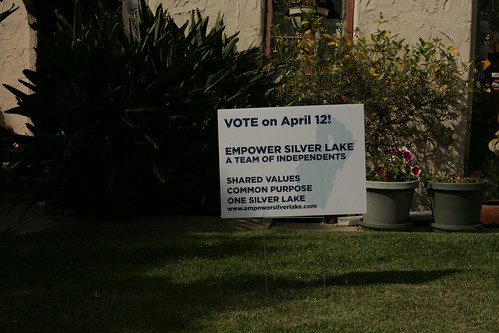
The more I became involved in the Neighborhood Council, the more I was horrified by how far astray it was from what I believe to be the proper scope and function of government.  At one point, I was so appalled that I decided I couldn’t go forward.  It was not the right thing for me to do or be involved in.  I sent the following letter to the leader of our little coalition.

Dear ____________,

     I had an interesting realization today.  The process began when I received a Facebook notification that the agenda for a special meeting of the Governing Board of the Silver Lake Neighborhood Council had been posted to the SLNC website.  Interesting, I thought, the last I checked the next meeting was in April.  I opened up the SLNC page and navigated over to the special meeting agenda.  After reading it through, I realized that there were almost no items there that I agreed with or would support.  In fact, there are several items that I oppose, other items that are empty gestures and none that I could support.  I thought back to the first SLNC meeting which I attended, the March Governing Board meeting, and realized that this is what the SLNC does.  These are the issues in which its members and the community are interested. 
     At our candidate meeting the other night, when I said I believe that I was the most conservative member of the group, I believe I understated my position.  I realize now that I was the only conservative member of the group that evening.  In fact, one of the few ideas I have in common with the group is the concept of civil debate.  That may well be the only thing we have in common politically.  The SLNC is nothing if it is not a political organization.  It is by design a tool of the City of Los Angeles to engage citizen support and input into local government.  Like most, if not all, government bodies in this city the SLNC operates on the left of the political spectrum; that much is obvious just from reading the latest Governing Board Agenda.  As I tried to say in that first meeting, I am on the right side of the political spectrum. 
     The SLNC reflects the political views and philosophy of the community.  I am at odds with those views and that philosophy.  There is no point in my spending time campaigning for election to a government body where the majority of members will always directly and often vehemently oppose my beliefs.  I’m not interested in being the lone dissenting voice, or the guy who opposes everything the council proposes.  That wouldn’t be fun, or useful for anyone.  My time would be better spent supporting a group that is working toward those goals and purposes which I consider vital and important.  The SLNC is not that group. 
     I should have done my homework before I ever submitted my name as a candidate.  I regret not doing that.  Until this evening, I truly had no idea what I was getting myself into.  Don’t get me wrong, though, I don’t dislike anyone on the “team.”  As a matter of fact, I believe that the team is made up of good, caring people who really do want what they think is best for the community.  We just don’t agree upon what is “best.”  That doesn’t make any of us bad people, just people who disagree. 
     I believe that my best course of action at this point is to withdraw my candidacy for the SLNC.  I hope this is not a great inconvenience to the team.  As I said, I should have done more research before I sent my name in to the city clerk.  I do want to continue to work with Nadine as a volunteer on the Public Safety Committee.  I think I can do some good there.  I’ll also, of course, continue to be active in my Neighborhood Watch.

Respectfully submitted,


I immediately received a return e-mail telling me that it would be unfair to the rest of the coalition for me to withdraw at that point since flyers had already been printed and the website created, all of which included my name.  I saw her point and the error of my ways.  I agreed to see the campaign through to the end.  The worst that could happen was that I might be elected, as unlikely as that seemed.  I made plans to speak at the candidate forums.

Monday, April 14, 2014

The Issues in Detail

Silver Lake Reservoir

In order to get ready for the upcoming candidate forums, I needed to determine what solutions I had for all the issues that were likely to be discussed. First I listed all the topics I could think of that could be addressed by the Neighborhood Council. I’ll address them in no particular order here.

Crime Prevention: The best tool we have right now is Neighborhood Watch. With an active neighborhood watch group, communications are enhanced, awareness is increased and information is shared. When each person knows his neighbors and something of their habits, things that don’t fit are more easily observed. You need to know what is normal before you can see what is abnormal. If your neighbor’s teen-aged son and his friends hang around on the sidewalk in front of his house, that might be considered normal. If a few young people who you’ve never seen before are hanging around in front of his house, that would be noteworthy. You might call your neighbor and ask him what was going on. The group on the sidewalk might prove innocuous, or it might be of concern, depending upon what you find out from your neighbor. That’s the value of Neighborhood Watch, it gets people looking out and interested in what’s going on outside their houses. Information about what attracts crime to the neighborhood can also be shared among the neighbors. Then, if you see that one of them forgot and left their expensive electronic device in plain sight on the seat of their car, you can remind them that it would be safer if they put things away and out of sight. Communication, awareness and shared information, along with a close working relationship with local law enforcement, works very well in keeping a neighborhood safe.

Neighborhood Watches from different areas can ally and work together to expand their influence and make safer and ever increasing area and the network grows. More importantly, the Neighborhood Watch is a way for people to take responsibility for themselves, their neighbors, their neighborhood and their city without becoming overly dependent upon government to keep them safe. Law enforcement is just that, enforcement. Crime prevention is another matter and is best handled by individuals working together to create an environment where criminal activity is not tolerated, which is what Neighborhood Watch does best.

Disaster Preparedness: Like the Neighborhood Watch, a good disaster preparedness program can also enhance communications, awareness and be a way to share information and concerns. If only you, of all your neighbors, are the one prepared to survive in case of a major disaster, your survival will be less assured than if your neighbors were also adequately prepared. If you all have food, water, tools, first aid supplies and other necessities in quantities sufficient to survive until things get back under control, then you can concentrate on doing just that, surviving, not defending your supplies from those hungry people who didn’t plan ahead. Neighbors working together so as to be prepared for whatever might happen gives the neighborhood a broader purpose then just living day-to-day. People thinking about how they can help one another in a disaster scenario will tend to be very good neighbors indeed.

Open Space: Rather than looking to government to acquire, with taxpayer money, any given open space or green space area, and then spend more money to create a safe, attractive and usable space for the community, those people who live in the area ought to band together and buy the land they wish to preserve and then hold it in trust for the community. Those who use the space should be the ones to pay for development and maintenance of that space.

Community Gardens: If you want to get together with your neighbors and plant a garden, then one or more of you should allow the group to use your land for the garden. As with the open space/green space concept, if it is something you want then you and those of like mind ought to be the ones who pay for it. Finance it as a co-op with shared benefits and shared expenses.

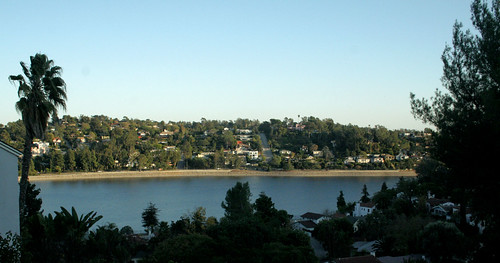
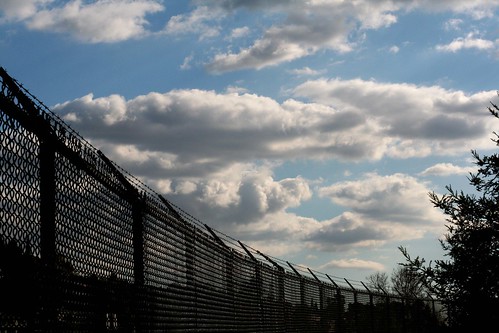
The Silver Lake and Ivanhoe Reservoirs: As long as these bodies of water are owned by the city, plans to open up the shorelines to the public will be just dreams that will never come true. The city will never open itself up to the liability of a recreational facility of that magnitude. The fence will never be completely gone.

Parking: The battle for parking spaces between businesses and residents cannot be resolved without some sacrifice on both sides. The public transportation system in Los Angeles, which includes streets, freeways, trains, subways and buses, is inadequate to the needs of the city. Until public transportation can, in a timely manner, get you to where you need to go, people will find other ways to get around. Los Angeles is not a dense European city; instead it is a giant, sprawling, unorganized group of suburbs and neighborhoods that don’t lend themselves well to public transportation.

Commercial Development: Commerce is good, that’s where jobs come from, among other things. However, new businesses must be carefully evaluated as to their impact upon the community in the areas of added traffic, both foot and auto. There needs to be a balance between residential and commercial space so that everyone gets what they need. If the new business is a bar or restaurant, noise late into the evening can be a problem for the people living nearby. Patrons need a place to park and if the business has inadequate space for that purpose, the neighborhood becomes their parking lot to the detriment of the residents therein.

Small Lot Development: This is a concept where a number of dwellings are built close together on a single lot with a shared common area and a shared parking area. Depending upon the number of units that are built, this can work or not inside a residential neighborhood. If there is adequate parking and setback from adjacent living spaces, it could be workable for the surrounding residents. If not, then the added traffic and noise may be quite detrimental to the neighborhood.

AirBnB: AirBnB is a big business and there is a lot of money at stake, both for the company and for the participating homeowners, but if you are negatively impacting your neighbors through parking problems, excess noise at unusual hours and disrespect for the neighborhood, then you are being unethical in running your home as a BnB. If you are not zoned for short-term rental, then you should not be using your property in that way. You should have gotten permission or variance from the city before beginning a short-term rental program in a residential neighborhood. You knew the zoning regs when you bought the home and should abide by them now. If you wish to change the zoning regulations so that you can legally operate a BnB from your home, then you should continue to go through the legal process with the city and attempt to make that change. At present, though, it is a violation of the law and operations should be suspended until the legal process is completed.

Gangs and the Gang Injunction: If the word Gang is defined as a support group for criminal activity, then it has no legitimate function in the community. The violence and intimidation that are used in the course of gang business are unacceptable in a civil society. If the gang injunction gives law enforcement another tool to curb the violence and discourage the gang in its operations, I am all for it.

Budget Overages for the SLNC: If we are to be proper stewards of a portion of taxpayer monies, then we should strive to get as much benefit as possible for the least amount of money spent. Giving away money to "worthy causes" as a feel-good gesture is not a proper function of government. It we can use the taxpayer monies to make the neighborhood safer, more attactive, more pleasant to live in, then, perhaps, that is money well spent. Otherwise, that money is best left in the pockets of the taxpayers by way of lowered taxes and less money spent on government.

Pedestrian and Bicycle Safety: No driver wants to run over another human being. Did I even need to say that? It happens, though, and it needs to be addressed. Part of the problem is distracted drivers – drivers doing something else besides paying attention the road in front of them, the traffic, the bicycle wobbling along between the parked cars and lane of traffic, the upcoming crosswalk, the guy about to jaywalk, etc. There is too much going on while driving a car to be doing anything other than just driving and paying attention to everything around you. Driving while texting, talking on the phone, programming the GPS, tuning in the radio, applying makeup, eating, drinking, or anything else that isn’t driving, is the wrong thing to do. Another aspect of the problem that I have observed is they some bicyclists ride very aggressively and put themselves in unnecessary peril instead of riding defensively and avoiding potential encounters with large, heavy, moving metal objects.

Infrastructure – Street and Sidewalks: This almost naturally falls into the purview of the Neighborhood Watch. Damages streets and broken sidewalks are a public safety issue. While we’re out keeping an eye on the neighborhood, we could also take pictures of infrastructure damage and forward them on to our local City Council Office as coming from the Neighborhood Watch Group. This would give the complaint a bit more weight and might precipitate more prompt action by the city. If there are unhappy voters involved, the politicians tend to pay attention.

Water Use: I’m all for frugal use of water. We live in a desert, after all. Most people don’t overwater, or waste water because it costs them money when they do. That sort of regulation makes sense to me, and it falls under what government does best, which is stop things it doesn’t like. Making things more expensive tends to lessen demand for them. Making them too expensive gets you back into politics and politicians who can require the Department of Water and Power to keep fees at reasonable levels so as to keep the voters content.

Homelessness: This isn’t really an issue that a Neighborhood Council can do very much about, except offer sympathy to the poor souls who live on the street. Some large percentage of the homeless population is being created by the “mental health” industry which destroys people by using psychotropic medications, and barbaric “therapies,” and then turns them out onto the street when their insurance runs out. It’s a bigger problem than a Neighborhood Council is designed to handle.

Noise and Activity from the Local Bars: This is an area where the Neighborhood Council could help, but the hard work must be done by those most affected, the neighbors themselves. One nearby group of neighbors banded together and, with some help from certain members of the Neighborhood Council with City Hall connections, is having permit parking implemented in their area. This will force the bars to provide some other place for the patrons to park and it will move those patrons out of the neighborhood where they were very much a nuisance. This is good example of what a Neighborhood Council ought to be doing. It should be helping people in the community to define and work out how to solve their own problems.

Once I had defined the issues for myself, I was able to go into the candidate forums knowing what I wanted to say about each one. As it turned out, very few of the issues were address in the forums. The time given to each candidate to speak on any given subject was never any longer than 60 seconds. You can’t say very much in that length of time. It didn’t matter much what anyone said because there were more candidates at the forums than public. We were essentially taking to each other, which accomplished nothing.

In thinking about all these issues in light of my philosophy on government, I realized that what people really need to do is figure out how to solve their own problems, rather than waiting for some government agency to solve it for them.  A government’s main power is the ability to stop things.  People don’t really need stopping as much as they need to simply look around, talk to their neighbors, get a good idea of what the real problem is and then work out a solution.  That’s basically what I said at both of the candidate forums.  No one got it.  They weren’t there to encourage self-reliance or independent initiative, the candidates were they because they want to be part of the government and the audience was there to see what the candidates were going to promise to do for them.  It was politics at its worst.  I did not enjoy it.
Friday, March 28, 2014

Silver Lake Neighborhood Issues

So It Begins


One of the things I’m going to have to do as a candidate for the Silver Lake Neighborhood Council (SLNC) is to speak at several candidate forums.  To do that effectively I need to know what concerns and issues that I am likely to be asked to give an opinion upon.   Listening to public comments at the meetings I’ve attended gave me some idea as to what those might be.  Living in the neighborhood made me aware of others.  I made a list of them and then started gathering information on those I didn’t know very much about.  The issues as I perceived them are as follows:
Crime Prevention
Disaster Preparedness
Open Space
Community Gardens
Reservoir Plans and Usage
Parking
Commercial Development
Small Lot Development
Air B’n’Bs
Gang Activity
The SLNC Budget
Pedestrian and Bicycle Safety
Infrastructure – streets and sidewalks
Water use
Homelessness
Noise and activity from the local bars 

There are certainly other issues and concerns, but my list seems to cover those which the Neighborhood Council could do something about.  Because of the large number of candidates, fifty nine at last count, the time each person will be able to speak on any given issue at the upcoming forums will be severely limited, so I need to get my thoughts on each of the issues distilled down to the essentials so that I can address them clearly and concisely.  To do that I looked at each one, decided what I considered were the important factors and then made notes addressing those factors. More on the details of my thoughts in the next post or two.

There was a special meeting of the Governing Board posted on the SLNC website.  There were items on the agenda that I think fall outside the scope of what the Neighborhood Council should be addressing.  There was a motion in support of the veto of a Senate Bill in Arizona, and a motion in support of some sort of climate change march and rally.  It is this sort of activity that incited me to want to get involved with the Neighborhood Council. 

If the SLNC is going to make motions in support of things, those things should have something to do with the neighborhood.  I instantly thought of several people in the area who should have motions made supporting the work they are doing, work that betters the community in a tangible way, like cleaning up litter, working with local business and the city to mitigate parking issues, heading up a neighborhood watch, making a neighborhood safer for children, working with LAPD and the city on public safety issues, and bringing C.E.R.T. training to the area.  We need to acknowledge and support the people who are doing things to help their neighborhood and make it a better place in which to live, and leave the out-of-state and global issues for someone else to deal with.  If you’re going to make a feel good gesture, make one that benefits someone who is working for the community and sets them apart as an example of what we all should be doing.  If I am elected, I hope I will be able help the council do more than just make empty gestures.

Wednesday, March 19, 2014

The Neighborhood Council

Reflecting on the Reservoir


Through the Neighborhood Watch, I learned about Community Emergency Response Team (C.E.R.T.) training.  The Los Angeles Fire Department offers a series of seven evening classes that attempt to teach people what to do in the event of a natural disaster such as an earthquake, or a manmade disaster such as an act of terrorism or civil unrest.  Over the seven weeks (there is one class a week), you learn a bit of first aid, a few search and rescue techniques, some organizing skills, and you get some advice on what you might need in the way of tools and supplies for your own personal safety and survival.  I found the information quite useful, if somewhat limited in scope.  The limited scope encouraged me to do some supplemental studies where I got some in-depth information on the same subjects the C.E.R.T. classes covered.  I am continuing with that study since there doesn’t seem to be any limit to the scope of being prepared.  Even the years of my Boy Scout training and my attaining the rank of Eagle Scout were only the beginning of learning what it means to Be Prepared, but that subject will be several blog entries of its own.  You may have noticed that the title of this entry is “The Neighborhood Council.”  That’s what I want to tell you about today. 

I have known of the Neighborhood Council for a number of years, but, until recently, I hadn’t paid much attention to what it did or who was involved.  At one of the CERT classes, some flyers were handed out which gave information about and sought candidates for the upcoming Neighborhood Council elections.  I took one of the flyers with me when we went home after the class.  It sat on my desk for a day or so and then I looked at it more carefully.  There was a website address given and, out of curiosity, I had a look at it.  There were some candidates already listed, so I looked at those.  I noticed that they were running in regions.  I figured out which region I was living in and looked to see what candidates were running there.  There was only one and I didn’t at all agree with what he saw as the immediately and long-term needs of the community.  There were two open seats for my region.  I just couldn’t let it go.  If this person was the only one running, a dissenting voice would be needed just to keep things in perspective.  I submitted myself as a candidate.  That one innocent act of seeing a need and deciding to fill it was the tiny pebble that started an avalanche in my life. 

The day I submitted my name was just five days before the deadline.  I thought that at that late date it was unlikely that very many other people would be entering the race, and it is a “race,” as I have come to find out.  By the time the deadline arrived there were sixty-two candidates running.  Between the time I entered my name as a candidate for my region and the arrival of deadline, I decided that I might have a better chance of getting elected if I ran “at-large,” in other words for the whole area of Silver Lake, rather than only for my region.  I withdrew as a regional candidate and put my name in as an “at-large” candidate. 

Now I needed to know more about what I had gotten myself into.  I attended the next meeting of the Silver Lake Neighborhood Council (SLNC) Governing Board.  It was better and worse than I expected.  I know what politics is like in Los Angeles and this was just a local version of the same old story.  There are people who expect government to do things for them and there are people who want to be left alone to do things for themselves.  In Los Angeles, there seems to be a great many more of the former than the latter involved in any given political discussion.  The lack of civility in the comments and questions from the community to the council members was not completely unexpected, but I was unpleasantly surprised by the amount of name-calling and childish tantrum throwing that occurred when some people didn’t get the results they were demanding.  There was also a fair amount of squabbling over technicalities and procedural issues which took time away from their actually getting through the items on their agenda.  In other words, not a lot got done.  The most contentious issue that came up, was discussed and decided upon, but was later ruled invalid by the bureaucracy at the city level that oversees these Neighborhood Councils.
 
I subsequently attended a couple of committee meetings, one dealing with Public Safety and another with Planning and Urban Design.  The public who attended those meetings had a very similar attitude to those I had seen and heard at the Governing Board meeting.  I was getting a very good idea what I was getting into. 

After discussing my candidacy with a few other like-minded people, I decided to go forward.  If I am elected, which seems rather unlikely, I hope to be able to add a sane and rational voice to the council.  I have acquired a working knowledge of the fundamentals of good government by studying U.S. and world history.  Perhaps, I will be able to share some of those fundamentals with the group.  If nothing else, I have a foundation of knowledge to stand upon and no real axe to grind in being on the council.  My purpose in running is simply to contribute some civility, rationality, frugality and common sense to this Neighborhood Council.  From what I’ve seen so far, those things would be valuable to that organization and of benefit to this community.